

(Iowa Capital Dispatch) Several times each summer, Iowans drive set routes at night and turn a discerning ear to the 16 unique frog and toad songs that can be heard across the state.
The Iowa Department of Natural Resources is seeking new volunteers for the state’s frog and toad survey and will host virtual workshops in early March for those interested in the program.
DNR started the survey in 1991 to help track amphibian populations in Iowa, which are declining globally.
According to a report from the U.S. Geological Survey, if amphibian decline continues at the predicted rate, in 20 years the average amphibian species will be present in only half of the places that it is currently present.
Habitat loss, according to USGS, is the top reason for species decline, but several infectious diseases have also contributed to the ongoing decline.
The most recent frog and toad report from DNR shows that since 2013, species like the American toad, eastern gray treefrog and spring peeper have shown small declines in detection, while the detection of other species such as the American bullfrog or the cricket frog have increased over the last 13 years.
This data was gathered from the volunteers in Iowa who participate in the program.
“It’s rare to have such a broad set of data collected over so many years on ONE species, much less a whole group of vulnerable species,” Stephanie Shepherd, the program’s coordinator said in a news release.
How does the survey work?
New volunteers must attend a training workshop, about three and half hours in length to learn about the program and begin to distinguish the different frog and toad calls.
Volunteers can choose an established route in their county, or can opt to develop their own route if there are no available routes in their area. Each route has 5-10 “wet spots” that volunteers stop at to listen and record the different species they hear.
DNR has an online library of frog and toad calls to help volunteers learn the difference between the high-pitched trill of an American toad, the sheep’s-bleat sounding Woodhouse’s toad or the cricket frog’s call which DNR describes as sounding like “two glass marbles being banged together.”
Survey routes are to be driven three times between designated time periods in spring and summer. Typically, DNR estimates the process takes volunteers a total of six to eight hours each year to complete the survey.
Volunteers hold on to and organize their findings and submit the results online and via mail to DNR at the end of the season.
In 2025, volunteers covered a total of 135 routes and collected information at 893 wetland sites across the state. While data was more widespread in 2025 than in past years, DNR listed Henry, Ida and Wright counties as those in greatest need of volunteers. To date, no frog and toad surveys have been conducted in these areas.
There are plenty of other counties that have had some surveys in the past, but DNR lists as “in need” of volunteers for the upcoming survey season. Many of the routes, and the most needed coverage, are in rural parts of the state, but there are some urban survey routes as well.
The virtual training workshops are scheduled for March 7 from 12:30 p.m. to 4 p.m. and March 9 from 6 p.m. to 9:30. Interested participants must register for the free training events ahead of time.
More information on Iowa’s frog and toad surveys, plus other citizen science programs in Iowa can be found online at DNR’s volunteer wildlife monitoring page.
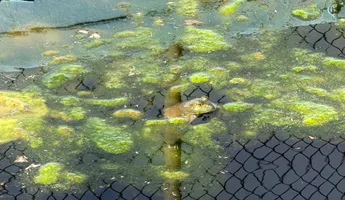
(An American bullfrog pokes its head out of the water. Photo by Karsan Turner for Iowa Capital Dispatch)