


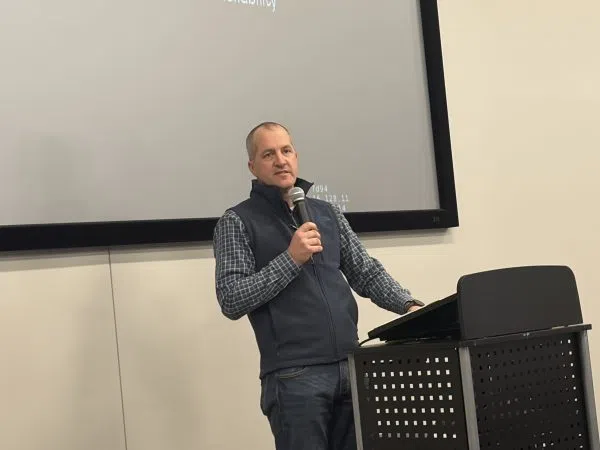
(Audubon) Iowa Secretary of Agriculture Mike Naig brought his message of conservation and water quality to southwest Iowa Friday, speaking at the quarterly meeting of the Hungry Canyons Alliance in Audubon. Addressing local leaders and landowners at the Audubon Rec Center, Naig highlighted ongoing efforts to reduce soil erosion and improve water quality through targeted watershed projects and partnerships across the state.
The Hungry Canyons Alliance is a coalition of counties in southwest Iowa working together to reduce soil erosion and improve water quality in the region’s highly erodible “hungry canyons.”
Through targeted watershed projects, cost-share assistance, and strong partnerships with landowners, the Alliance implements practical conservation practices that keep soil on the land and nutrients out of Iowa’s waterways. Hungry Canyons Alliance receives funding from the state via the Iowa Department of Agriculture and Land Stewardship.
Naig says the state has been implementing the nutrient reduction strategy since 2013. He says 28.4 million dollars is dedicated to water quality initiatives. The state has 450 partners engaged in work, whether at the urban level, locally, or through water quality work.
Naig mentioned Iowa has been a leader in conservation. In 1972, Iowa became the first state in the nation to allocate resources for soil conservation. Naig says cover crop acres have increased from 40,000 across the state to 400,000, and today there are 4 million acres of cover crops in Iowa.
Naig highlighted other state-implemented projects, such as the Iowa Nitrogen Initiative, a public-private partnership aimed at optimizing nitrogen management for Iowa farmers, improving productivity, profitability, and environmental sustainability.
Additionally, Ag Secretary Naig mentioned the Cattle and Conservation Working Lands Project, led by local Soil and Water Conservation Districts with support from the Iowa Department of Agriculture and Land Stewardship and the USDA Natural Resources Conservation Service, to strengthen livestock operations and improve water quality in Iowa.
Launched in Taylor County in 2017, it is now active in eight counties, the project helps producers convert less profitable cropland to hay or pasture and adopt practices such as cover crops, grazing improvements and grade-stabilization structures. Naig says that to date, the program has converted more than 15,000 acres to forage and added over 180,000 acres of cover crops.
Iowa Ag Secretary Mike Naig made stops in Audubon, Adair, and Union counties on Friday as part of his annual 99-county tour.