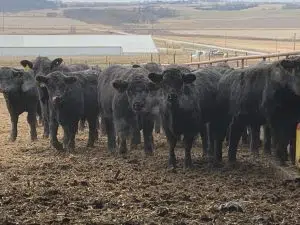
(Washington, D.C.) USDA Chief Economist Justin Benavidez discussed the potential for cattle herd expansion during a meeting with farm broadcasters at Washington Watch this week, noting that profitability in the cattle industry is closely tied to long-established cyclical trends spanning over the past 100 years.
Benavidez says the early indicators are starting to lean toward the beginning of herd rebuilding; however, he cautioned that this is debatable. He has heard from people on both sides claiming there is some heifer retention, and others say there is no heifer retention. Benavidez adds that the USDA’s data does not tell the entire story. According to Benavidez, the USDA’s data is telling us that there is a pattern over time: the earliest indicators are a slight rebuild in heifers and an uptick year over year.
Benavidez says this does not mean an immediate overnight loss in price; however, he thinks we will see a gradual price decrease, higher inventory year over year, and begin the other side of the cycle.
The U.S. cattle herd is at its lowest since 1961 (and some reports note a 73-year low in January 2024) due to prolonged droughts, especially in major beef-producing states like Texas. Since 2018, many female cattle have been sold off rather than retained for breeding. Per capita beef consumption has been steady for years, but demand from meatpackers and consumers remains high, keeping prices elevated, according to AgWeb.com.