

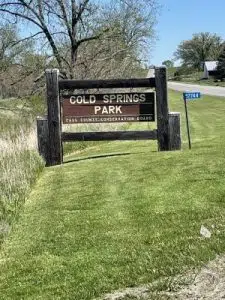
(Lewis) The Iowa Department of Natural Resources (DNR) will relax fishing regulations at Cold Springs Lake, effective Monday, June 15. DNR Fisheries biologist John Lorenzen says this allows anglers to more freely harvest fish before the lake is chemically renovated as part of a plan to improve the quality of angling for years to come.
Lorenzen says the lake renovation project starts in August, so ahead of time, they want people to use the resources as much as they can before the work begins.
Lorenzen says anglers with a valid fishing license may harvest any size or number of largemouth bass, bluegill, redear sunfish, crappie, channel catfish, and all other fish species from Cold Springs Lake. Any number of fishing poles or jug fishing will be allowed. Anglers must remain in sight of these lines at all times, and follow all other fishing regulations and area rules. Trout lines will be allowed (name and address must be attached), however lines may not be set across the entire water body. Nets, dynamite, poison, electric shocking devices, or any stupefying substances will not be allowed. It is illegal to sell fish or stock captured fish into public waters.
Relaxed fishing regulations for Cold Springs Lake will remain in effect until August 1. Anglers may fish anywhere within the lake. DNR fisheries staff will collect game fish from the lake in mid-summer and relocate them to other lakes in the area.
The DNR will lower the lake water level approximately five feet starting August 1 to prepare for the renovation project aimed to improve the poor size structure of largemouth bass and bluegill and increase near-shore habitat. Fish data collected each year for the past 10 years shows poor bass health with no bass over the legal length limit. Bluegill data shows low catch rates of quality fish.
The fishery renovation is only part of a process to improve the lake’s fish population. Construction of in-lake fish habitat, primarily pea gravel spawning beds, will be built while water levels are down.
This project will continue through spring 2026. Starting August 1, lake users should expect limited access to the lake until water levels return to normal.