


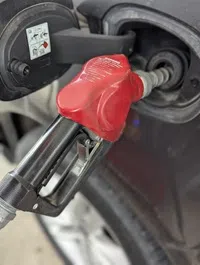
(Iowa Capital Dispatch) The national average price of a gallon of regular gasoline topped $3 Tuesday for the first time this year, and is expected to keep going up.
The average price Tuesday was $3.11, up about 11 cents from Monday, according to AAA.
“The pump reaction is not only underway — it’s accelerating,” said Patrick De Haan, head of petroleum analysis for GasBuddy, which tracks prices.
Increases were already on tap even before Saturday’s U.S.-Israel strikes at Iran, as warmer weather usually means more demand and refiners start producing a summer-blend product.
But the attack adds new, powerful momentum to the price surge. The war makes it tough to forecast how long any increases will last or how big they could be. Recent experience does offer some hope that any big spike won’t last.
“While oil markets continue to react to potential tensions in the Middle East, history has shown that the price increases are temporary and quickly fall back,” said Joseph Brusuelas, chief economist and principal at the consulting firm RSM US, on his Real Economy Blog.
President Donald Trump, speaking at a news conference with German Chancellor Friedrich Merz on Tuesday, sought to justify the strikes and said any price hikes would be temporary.
“People felt it’s something that had to be done,” he said. “So if we have a little high oil prices for a little while, but as soon as this ends, those prices are going to drop, I believe, lower than even before.”
Immediate market reaction
The market reaction to the Iran war so far has been swift.
Brent crude oil, considered the global standard, topped $80 a barrel early Monday, up from the low 70s last week.
Some analysts saw prices having the potential to go as high as $100 a barrel.
“The forecasts are wide-ranging from over $100/barrel to lower prices this week on new Iraqi oil hitting the market,” said Matt McCall, founder of NXT Wave Research, an investment and market analysis firm, in a tweet. “I see a spike to start the week…and then it depends on the longevity of the war. A quick war and oil does not stay elevated. What is almost certain is volatility.”
The surge in oil prices fueled an overall slide in U.S. stock markets Tuesday, with the Dow Jones Industrial Average down nearly 2% around midday.
Prices up across states
The increases were felt in state after state Tuesday, according to the AAA gasoline price survey.
The nation’s lowest gasoline prices tend to be in the South, from roughly Mississippi to Texas.
The price of a gallon of regular in Oklahoma, the least expensive of any state, was $2.62 Tuesday, up from about $2.47 Monday.
Other changes in the lowest price states:
Mississippi: $2.64 Tuesday, $2.55 Monday.
Kansas: $2.70 Tuesday, $2.57 Monday.
Arkansas: $2.70 Tuesday, $2.61 Monday.
Louisiana: $2.72 Tuesday, $2.58 Monday.
Tennessee: $2.72 Tuesday, $2.61 Monday.
Kentucky: $2.73 Tuesday, $2.63 Monday.
Texas: $2.74 Tuesday, $2.62 Monday.
The highest-priced gasoline tended to be in Western states. California has in recent years topped the price chart, and did again Tuesday at $4.67 per gallon, up about 1.7 cents a gallon from Monday.
California’s higher prices are the result of several special factors. It has tough environmental standards, and the state has more trouble compensating for refinery shutdown from interstate pipelines.
It’s more difficult for California to make up refinery shortages from interstate pipelines because of its location.
Other Western states have localized reasons prices stay high, and they tended to be less volatile because of the strikes. Some of the higher state averages Tuesday:
Hawaii: $4.40 Tuesday, $4.38 Monday.
Washington: $4.38 Tuesday, $4.37 Monday.
Oregon: $3.95 Tuesday, $3.92 Monday.
Nevada: $3.73 Tuesday, $3.70 Monday.
Future prices uncertain
The future path of prices depends on some huge unknowns. The biggest could involve the fate of the Strait of Hormuz, where the Iranians can exercise control. One-fifth of the world’s oil passed through there in 2024, according to the U.S. Energy Information Administration.
The strait is “one of the world’s most important oil chokepoints,” EIA said. Iranian officials said Tuesday the strait is closed, CNBC reported.
Most Iranian oil goes to China. Canada is the top importer of U.S. oil, followed by Mexico and Saudi Arabia, according to EIA. The U.S. sells more oil than it imports.
A prolonged change in Strait of Hormuz activity, or even the threat of change, is arguably already affecting oil prices.
“Even without a sustained blockade, the new risk of closure is already changing behavior,” De Haan said. He listed ship rerouting, war-risk insurance premiums going up and “freight markets bracing for significant cost increases.”
Bottom line, he said: “Most drivers should prepare for gradual increases this week.”