

(Red Oak) — Urban revitalization focuses on renewing and improving urban areas to enhance the quality of life, attract new businesses, and promote sustainable communities. The approach often addresses challenges such as housing, transportation, sanitation, and land use, particularly in areas experiencing urban decay.
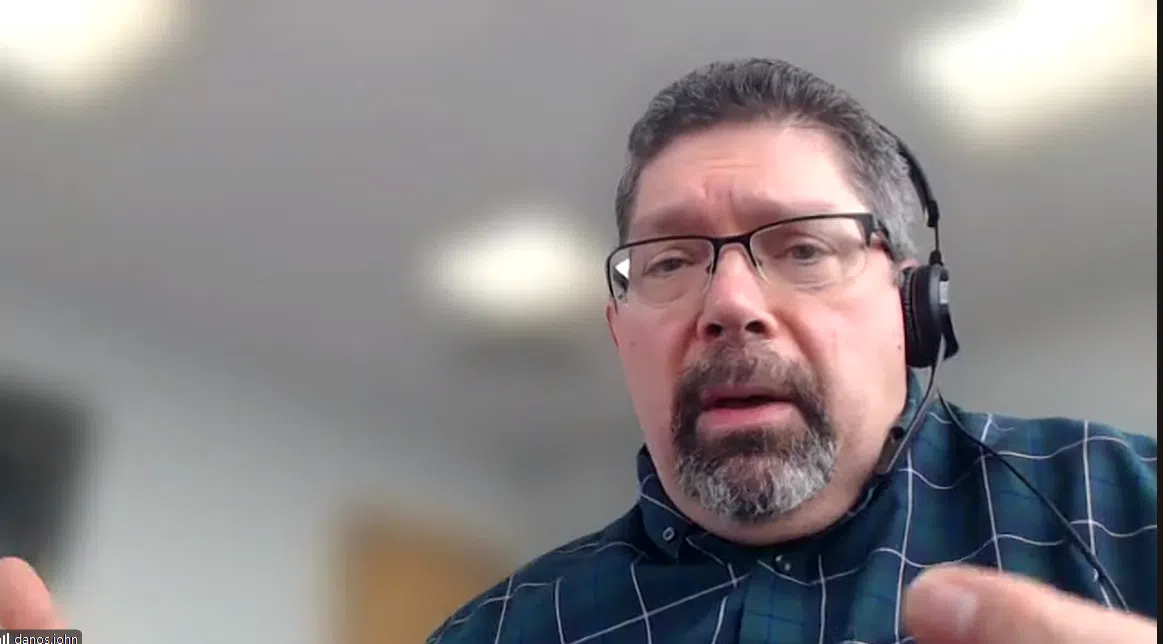
Attorney John Danos of Dorsey & Whitney in Des Moines, who serves as bond counsel for Montgomery County, spoke at Tuesday’s Montgomery County Board of Supervisors meeting at the invitation of the supervisors to get an understanding of what they would need to know and do to implement a County Urban Revitalization plan and ordinance and/or County Urban Renewal (TIF) to attract growth and businesses. Supervisor Chairperson Charla Schmid noted that Montgomery County currently lacks ordinances for either tax increment financing or property tax abatement—two tools that could support business development in rural areas. Attorney John Danos highlighted both mechanisms as potential options to encourage investment: tax increment financing and property tax abatement.
Danos explained that property tax abatement is a process in which the county permits private property owners to make new improvements on their property—improvements significant enough to prompt a reassessment by the county assessor.
Danos explained that a property tax abatement establishes a program allowing property owners who build new structures within a county-designated urban revitalization area to apply for tax relief. If approved, the owner would not be required to pay the full amount of property taxes typically assessed on the new improvements, thereby easing the financial burden during the initial years of development.
Danos noted that property taxes on new construction can be reduced—or “artificially low”—for a set number of years and at a designated percentage, depending on how the county structures the abatement program. These terms, he said, are flexible and can be tailored by the Board of Supervisors when establishing an urban revitalization area.
For residential projects, counties are permitted to offer up to ten years of 100 percent abatement for multi-family housing, such as triplexes or larger buildings. For single-family homes, the standard allowance is more limited: a five-year, 100 percent abatement on the first $75,000 of assessed valuation.
Danos also introduced the concept of tax increment financing (TIF), which will be detailed in a follow-up story.
The Supervisors took no formal action at Tuesday’s meeting.