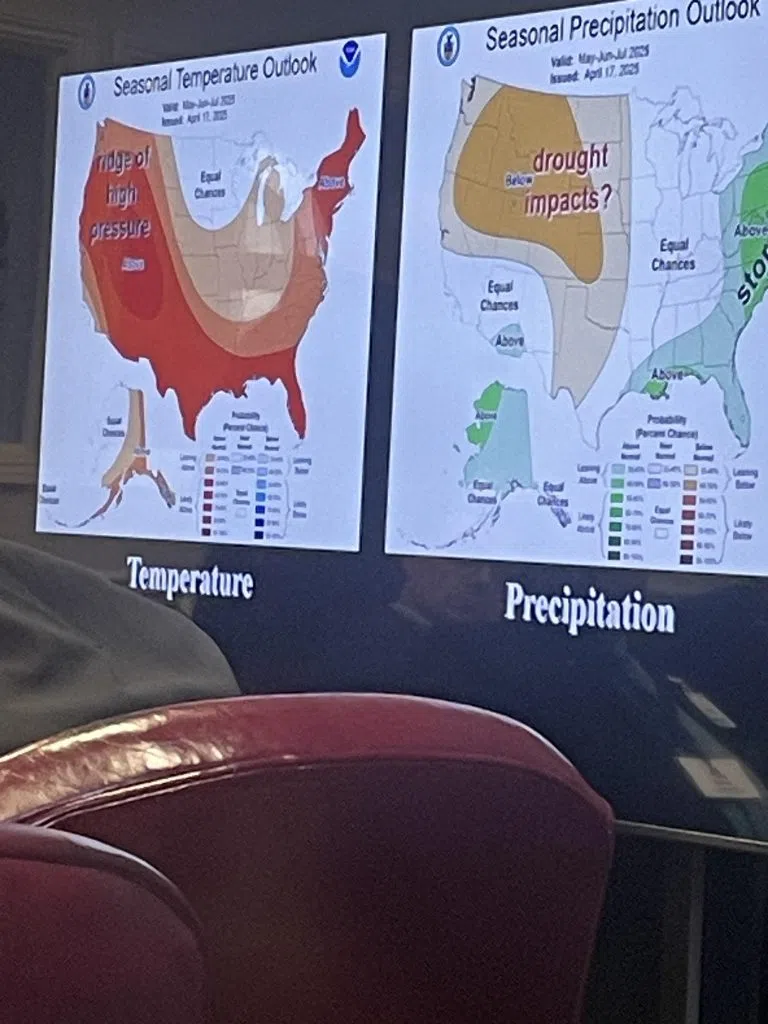


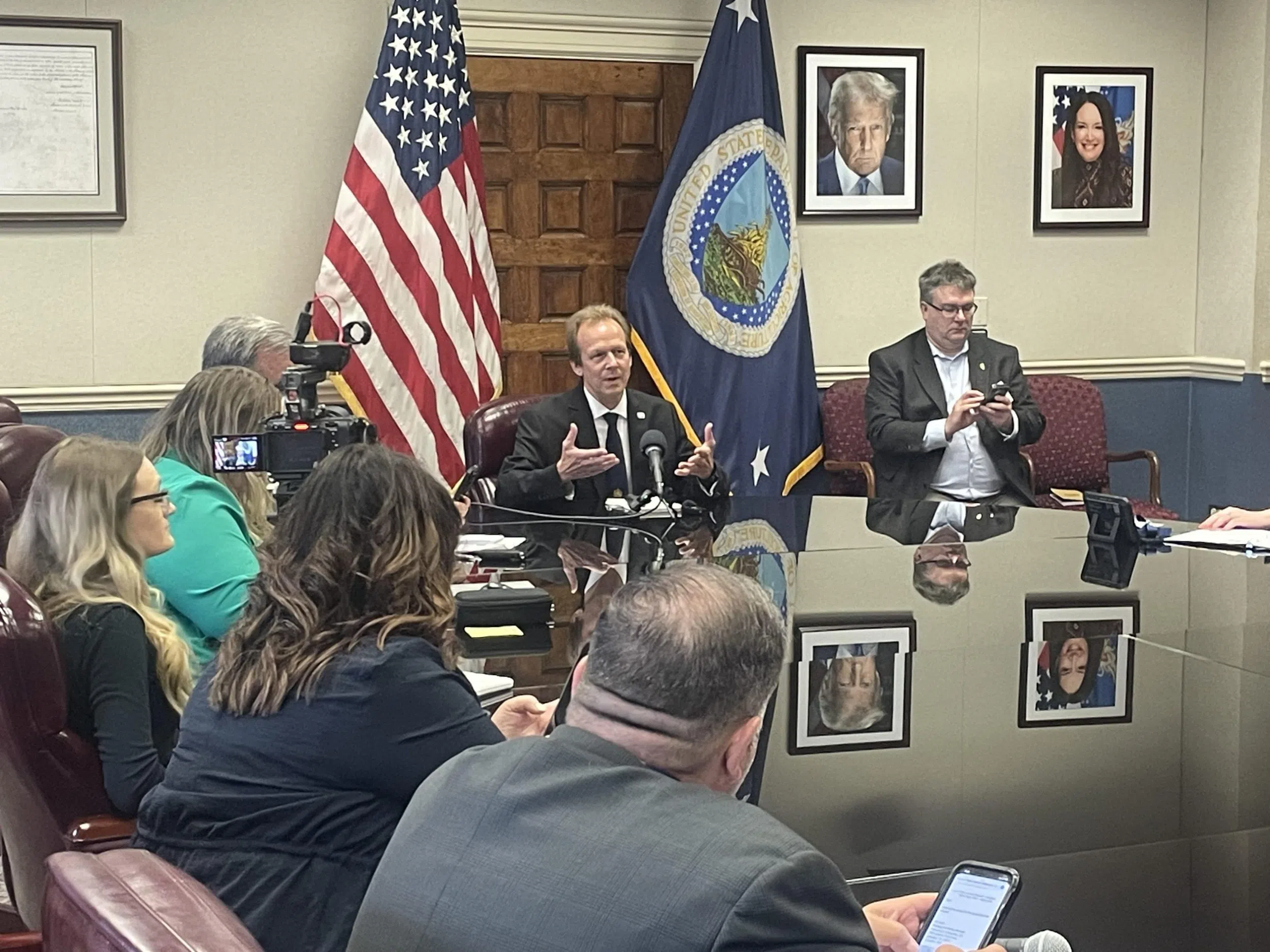
(Washington, D.C.) — USDA Meteorologist Brad Rippey, speaking Tuesday to the National Association of Farm Broadcasters, reported that 37 percent of the U.S. is currently experiencing drought, based on the latest U.S. Drought Monitor. This marks a significant improvement from last fall, when 54 percent of the country was affected. The primary regions still facing drought include the entire Southwest extending into central Texas, parts of the Northern Plains, and the East Coast, with Florida being the most impacted in that area.
Rippey explains that one key factor in developing a weather outlook is monitoring the equatorial Pacific, where scientists watch for signs of El Niño or La Niña. Although it’s a relatively small region, this part of the ocean has a major influence on weather patterns downstream—impacting areas to the north and east, including much of North America. As of late April, conditions in this region were classified as ENSO-neutral.
Rippey notes that, in addition to the equatorial Pacific, ocean temperatures remain warmer than average across much of the globe—including the North and South Pacific, the Indian Ocean, and much of the Atlantic basin.
Looking ahead, he says there’s a greater than 50 percent chance the U.S. will stay in ENSO-neutral conditions throughout the growing season. As we approach the end of 2025, there’s a 40 percent likelihood of a return to La Niña, though the odds still favor remaining in ENSO-neutral. Overall, Rippey is optimistic about the upcoming growing season, with the exception of areas like western Nebraska and South Dakota, which may face continued challenges.
Rippey doesn’t expect drought conditions to extend into the eastern Corn Belt, but he urges continued attention to the western regions, where drought remains in place. He also notes that NOAA will release its official hurricane outlook in the coming weeks.
In the meantime, Colorado State University—has already issued its seasonal outlook. Their forecast calls for 17 named storms, nine hurricanes, and four major hurricanes, all above the 30-year average of 14, seven, and three, respectively. The team also estimates a 51 percent chance of a major hurricane making landfall somewhere along the U.S. coastline, from Brownsville, Texas, to Eastport, Maine—significantly higher than the historical average of 43 percent.