


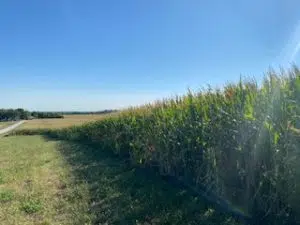
(Washington D.C.) Researchers at the University of Nebraska have been doing extensive studies on crown root rot in the Corn Belt. Dylan Magel, an assistant professor of plant pathology, said crown root rot is a confusing disease.
“They’re basically looking at crown rot, trying to figure out what the real cause of this disease is, and it’s been a really confusing disease, because it’s not clear what the pathogen that’s causing most of the damage actually is. So, they’ve been bringing a lot of samples back and really digging into those and trying to find which fungus is in there causing that. And a lot of them turn out to be species of a fungal genus called Fusarium. So, it’s a common fungus. It’s all over the place. It also causes diseases in wheat and soybeans, but it looks like that might be a contributing factor to this crown rot that we’ve seen, and I think they experienced quite a bit of that across the region last summer.”
He said the disease can have a significant impact on producers’ yields.
“The yield impact from this will often show up as dead plants, so they don’t see it impact the entire field, but they will see just certain plants mid-to-late-season, start to look stressed and wilted, and then you’ll come back, and you’ll see several green plants in a row, and then they’ll just be one dead plant, and they call that a “ghosted plant.” So, when they see that the fungus got in there and clogged up or impacted the ability of that plant to move water, and if it can’t get water up, it’s just going to dry out and die.”
Magel talked about the optimum conditions for crown root rot to develop.
“It just depends on those conditions, and I think maybe a driving factor in this and a lot of soil-borne diseases is going to be soil moisture and early-season temperatures. So, in this case, maybe if you get a pocket of the field that is wet and has more moisture there, the fungus is going to thrive and do a little bit better, and in cooler temperatures, that seems to help the fungus get into those plants a little bit better. In areas where you get those perfect wet, early, cool-season temperatures, it could infect more of those plants and kill them.”
The best thing farmers can do is keep a close eye on their fields.
“If you’re not sure if you have this or not, watch your fields and see what’s present. If you have plants dying like that, it’s really hard to go and look at them and tell exactly what it is. So, I know Tamara’s research team here is still working on this, and Iowa has projects working on this, too. So, reach out to your local Extension Service in whichever state you’re in. A lot of our extension services work together, so if you bring samples in, we’ll typically try to get that information to whichever team is doing the most current research on it.”
Dylan Magel of the University of Nebraska.