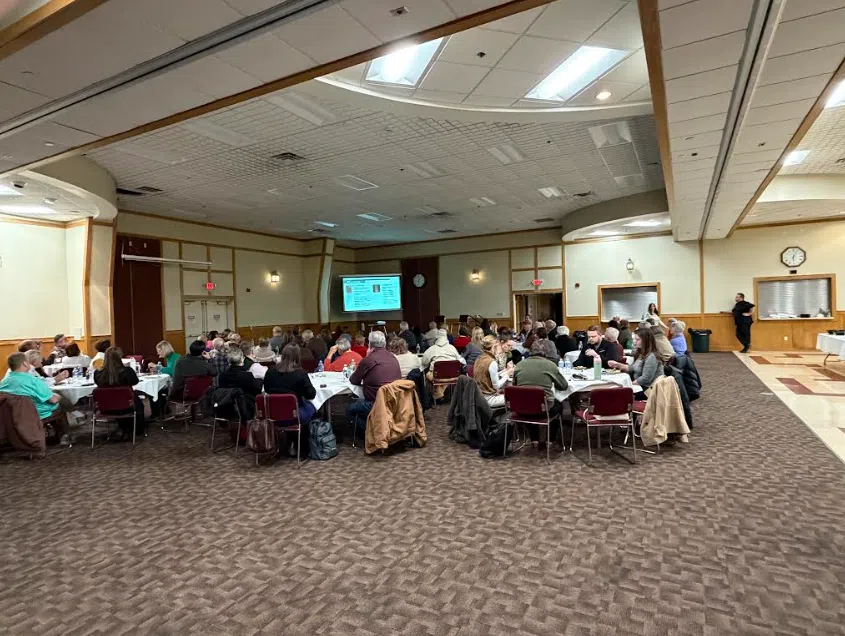
(Atlantic) Iowa has become a focal point in the ongoing battle against cancer, holding the unfortunate distinction of having the second-highest rate of new cancer cases in the United States. With cancer affecting so many across the state, public health initiatives like the Cancer in Iowa: 99 Counties Project are crucial for raising awareness, enhancing cancer education, and fostering community engagement in every county. Representatives from the University of Iowa and other medical representatives address Cass County’s high Cancer rates at a consortium at the Cass County Community Center on Wednesday night.
Mary Charlton, PhD, Professor, University of Iowa Department of Epidemiology, Director, Iowa Cancer Registry, says the 99 Counties Project is a statewide initiative aimed at addressing the growing cancer burden by providing vital cancer data and educational resources to local communities. Dr. Charlton says this project works to ensure that residents of each of Iowa’s 99 counties are well-informed about cancer risks, prevention, and support services
Representatives from the project frequently visit communities to share the latest cancer statistics, listen to local concerns, and offer opportunities for residents to share their thoughts and suggestions for improving cancer care and prevention in their areas. Charlton says Cass County is one of many counties where cancer continues to impact the lives of its residents. She says that according to recent data, Cass County’s cancer incidence rates reflect some concerning trends, and has the top cancer rates of all 99 counties in the state of Iowa with certain cancers appearing at higher rates compared to state and national averages.
The top five cancers affecting residents of Cass County include:
- Prostate Cancer
Prostate cancer is the most common cancer in Cass County, with an age-adjusted incidence rate of 140.8 per 100,000 people. This rate is statistically similar to the state rate of 129.5 per 100,000 and the national rate of 116.5 per 100,000, indicating that prostate cancer is a prevalent concern for local men. - Breast Cancer
Female breast cancer is the second most common cancer in Cass County, with an age-adjusted incidence rate of 136.6 per 100,000 women. This rate is also statistically similar to both the state (137.3 per 100,000) and national (131.4 per 100,000) rates, showing that breast cancer affects women in Cass County at a rate comparable to the broader population. - Lung Cancer
Lung cancer ranks as the third most common cancer in Cass County, with an age-adjusted incidence rate of 67.8 per 100,000. While this rate is statistically similar to the state rate of 60.0 per 100,000, it is notably higher than the national rate of 52.4 per 100,000. This suggests that lung cancer may be an area of particular concern for Cass County residents, potentially related to smoking or environmental factors. - Colorectal Cancer
Colorectal cancer is the fourth most common cancer in Cass County, with an age-adjusted incidence rate of 61.3 per 100,000. This rate is significantly higher than both the state rate of 40.3 per 100,000 and the national rate of 36.6 per 100,000. The increased incidence of colorectal cancer in Cass County may indicate the need for more focused screening and preventative health measures. - Uterine (Endometrial) Cancer
Uterine cancer, specifically endometrial cancer, ranks fifth in Cass County, with an age-adjusted incidence rate of 37.1 per 100,000. This rate is statistically similar to the state rate of 31.0 per 100,000 and the national rate of 27.9 per 100,000. Although the incidence rate is not markedly higher than state and national averages, it remains a significant health concern for local women.
Dr. Charlton explains that identifying the causes of these cancers is always complex. She notes that one contributing factor could be Cass County’s high obesity rate, which ranks second in the state. According to Charlton, 45% of the county’s residents meet the criteria for obesity based on their height and weight. Additionally, 30% of the population reports no physical activity, and the county has a smoking rate and binge drinking habits similar to the state average. These lifestyle factors are just a few of the potential contributors. Dr. Charlton also suggests that environmental factors, such as agricultural risks and genetic predispositions, may play a role.
In response to these cancer statistics and to help residents better understand and address cancer in their communities, there are a variety of resources available across Iowa. The Cancer in Iowa: 99 Counties Project offers informational materials, screening programs, and opportunities for local engagement. These initiatives are designed to help people make informed decisions about cancer prevention, detection, and treatment.
Local cancer support organizations, including the American Cancer Society’s Iowa division, provide counseling, financial assistance, and support groups for those affected by cancer. Additionally, many healthcare providers in Iowa offer cancer screenings, educational events, and wellness programs to help residents stay proactive in their health.
Community engagement is also vital to ensuring that residents of Cass County and other areas of Iowa have access to the best possible care and information. Regular town halls and outreach events hosted by the 99 Counties Project offer residents an opportunity to meet with health professionals, ask questions, and contribute ideas to improve cancer education and resources in their local communities.