

(Iowa Capital Dispatch) Iowa House Republicans approved a bill Thursday banning local governments from providing anti-discrimination protections for groups not listed in the state’s Civil Rights Act.
Senate File 579 — a measure approved by the Iowa Senate in the 2025 session with bipartisan support — requires complaints filed with local civil rights agencies and commissions in which one of the parties involved is a political subdivision, like a city or county, to be referred to the Iowa Office of Civil Rights.
But the measure was amended Thursday by the House to include language from House File 2541, a different proposal related to civil rights, banning local governments from enacting ordinances or other laws providing civil rights protections that have “broader or has different categories of unfair or discriminatory practices” than what is listed under the state Civil Rights Act.
The Civil Rights Act provides protections against discrimination in areas like housing, education, employment and public accommodations
Rep. Aime Wichtendahl, D-Hiawatha, called the amended bill an “enhanced civil rights removal act,” building on the measure passed in 2025 to remove “gender identity” as a protected class from the state’s Civil Rights Act. Large protests convened against the measure as LGBTQ+ advocates and allies said the law will allow for legal discrimination against transgender Iowans.
After the 2025 law was signed by Gov. Kim Reynolds, several local jurisdictions moved to provide these protections on a local level. Currently, 14 cities, as well as the unincorporated areas of Johnson County, have “gender identity” as a protected class against discrimination in housing.
Wichtendahl said the local governments added gender identity protection to show that their community was welcoming to newcomers and current residents of all identities.
“It is clear from the enhanced civil rights removal act that we are voting on today that transgender people are not welcome in Iowa,” Wichtendahl said. “… This bill before us today makes a mockery of our state’s most sacred values. It diminishes our ability to attract new workers, and it spurns our friends and neighbors who will find friendlier homes in neighboring states.”
Wichtendahl said the measure was a violation of both the Equal Protection clause and the Home Rule amendment of the Iowa Constitution. She called for the communities that would have local civil rights protections removed for transgender Iowans to “stand up” and challenge this measure if it becomes law.
“My message to those 14 cities and one county is this: stand up,” Wichtendahl said. “Stand up for justice, stand up for freedom and stand up for the rights of your citizens, because this state is long overdue for a check on its constitutional abuses and the reckless disregard for the rights and freedoms of its citizens. Stand up for your people.”
But Rep. Skyler Wheeler, R-Hull, said this provision was needed to provide entities like businesses and schools legal clarity in cases where there are state laws — like the ban on transgender individuals using school bathrooms and locker rooms that do not correspond with their sex assigned at birth — that could conflict with gender identity protections implemented at the local level.
“Is it a pointless culture war to try to have some sort of uniformity when it comes to these things?” Wheeler said. “We’re not going to have everybody and their mom (decide) they’re going to have this (in the) Civil Rights Code, we’re going to throw everything in it, or we’re going to take everything out of it. That’s absolutely insane. It’s unworkable for businesses, and it’s just a crazy idea.”
The amended bill would also remove the current requirement for cities with populations of 29,000 or more to maintain a civil rights agency or commission, though cities can still choose to maintain these bodies. It also states that if a complaint has gone unresolved by a local civil rights agency or commission for more than a year, the complainants must be notified of their right to transfer the complaint to the state office.
Rep. Ross Wilburn, D-Ames, brought up concerns that the changes in directing complaints to the state level could cause “escalation” of certain cases that could be resolved locally. Rep. Steve Holt, R-Denison, said this language would address a current problem with complaints going unresolved for more than a year at the local level.
Holt said the language included in the bill is “to make sure we have that accountability and that, in addition to that, information is given to make folks aware that they have an option and they can go to the State Civil Rights Commission.”
The bill passed in a 60-26 vote.
As this language was passed as an amendment on a bill already approved by the Senate, this proposal can be considered by the Senate through floor debate and not go through the subcommittee and committee process in the chamber. If the Senate approves the amendment, the measure will go to Gov. Kim Reynolds.
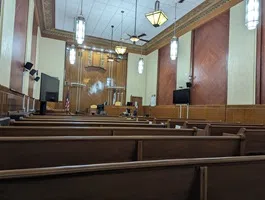
Protesters gathered in the Iowa State Capitol Feb. 25, 2025 as a Senate subcommittee considered legislation that would remove gender identity as a protected class from the Iowa Civil Rights Act. (Photo by Robin Opsahl/Iowa Capital Dispatch)