


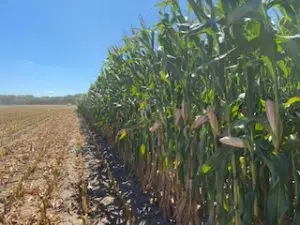
(NAFB) As crop farmers prepare to plant their corn, soybeans, or wheat in 2026, many are making decisions with the current farm economy in mind. Faith Parum, an economist for the American Farm Bureau Federation, says USDA economists revealed some key insights during the Annual Ag Outlook Forum.
“USDA economists revealed last week at the Agricultural Outlook Forum that there are some modest shifts in crop planting for 2026. We are going to see some declines in corn acreage from the record high levels of 2025 and some increases in soybean acreage, (with) wheat acres kind of remaining steady.”
USDA said planting decisions are being driven by commodity prices, input costs, and expected returns.
“We’re seeing lower crop prices and continued elevated production costs, which is going to affect profitability. On the other hand, we’re seeing expanded domestic soybean crush capacity, which may be leading to some of that increase in soybean acreage. Overall, though, crop rotations and agronomic considerations will always be a big part of planting decisions for farmers.”
Parum said it’s important to remember, though, that these are early predictions, and subject to change.
“Yeah, so these are predictions and projections that they’ll continue to evolve as the USDA gets more and more data. What we’re seeing right now, maybe, is a cautious farm economy. Producers are still struggling (with) those tight margins across all of our major row crops, and so until we see either higher commodity prices or lower production costs, we’ll still see a struggling farm economy.”
Again, that’s Faith Parum of the Farm Bureau.